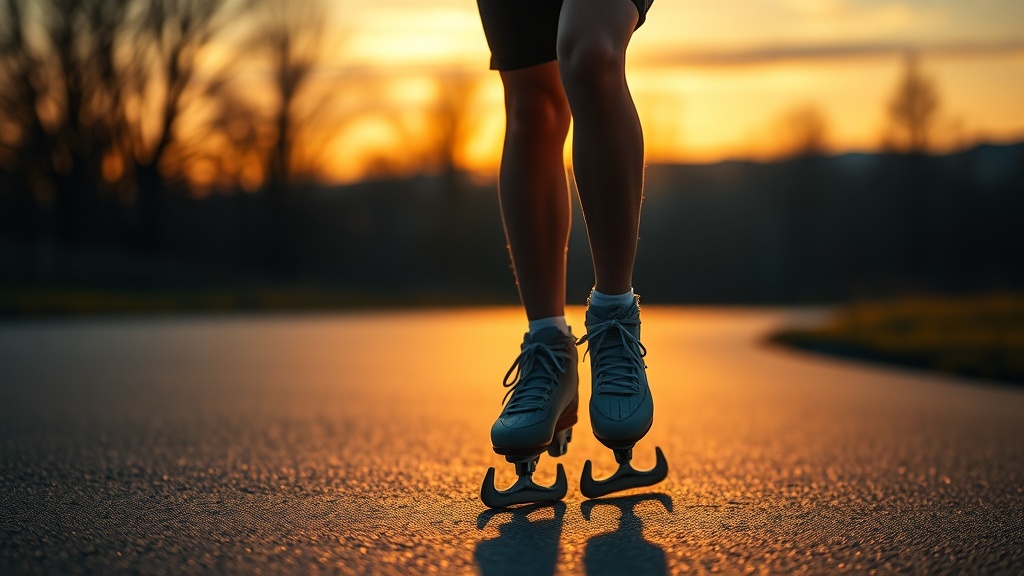
Why Your Calf Muscles Fail During Long Distance Skates

Studies on lower limb biomechanics suggest that the gastrocnemius and soleus—your primary calf muscles—can experience significant fatigue-induced cramping within just thirty minutes of high-intensity lateral movements. For inline skaters, this isn't just a minor inconvenience; it's a mechanical failure that can lead to falls, lost momentum, and long-term overuse injuries. Understanding how these muscles interact with your skates and the ground is the difference between a smooth glide and a painful session.
When you're pushing off, your calves are doing heavy lifting. They manage the explosive power required for each stride and stabilize your ankles against the lateral forces of the wheels. If your calf strength or endurance is lacking, your body tries to compensate elsewhere—often in the arches of your feet or the lower back—creating a domino effect of discomfort. We're looking at the mechanics of why this happens and how to stop it before it starts.
Can I fix calf cramps while skating?
Most skaters assume a cramp is just a sign of dehydration, but it's rarely that simple. While electrolytes matter, a cramp during a skate often stems from a lack of eccentric strength. Eccentric loading occurs when a muscle lengthens under tension—think of the moment your skate prepares to strike the ground. If your muscles aren't conditioned for this specific type of tension, they'll seize up.
To address this, you can't just drink more water. You need to build a foundation of strength that allows the muscle to handle the repetitive impact of the pavement. Incorporating single-leg calf raises or even basic plyometrics into your weekly routine helps prep your body for the rigors of the road. If you feel that familiar tightening mid-session, it's often a signal that your muscle fibers are struggling to manage the load, not just a lack of salt.
What are the best exercises for calf endurance?
Don't just jump into long-distance sessions without a plan. You need to train the muscles to endure sustained tension. Here is a breakdown of effective movements to build that specific endurance:
- Weighted Calf Raises: Use a step or a block to allow your heel to drop below the level of your toes. This stretches the muscle under load, which is vital for skaters.
- Tibialis Raises: Most skaters focus on the back of the leg, but the muscle on the front (the tibialis anterior) is what controls your foot's dorsiflexion. Strengthening this prevents the dreaded "shin splints" that often accompany calf fatigue.
- Single-Leg Balance: Practicing balance on one leg while wearing your skates (in a safe, controlled environment) forces the small stabilizer muscles in your ankles to work harder.
You can find more detailed strength-building protocols through resources like the Healthline fitness guides, which offer excellent visual cues for these movements. Consistency with these movements will pay off more than any fancy new pair of skates ever could.
How does skate boot stiffness affect muscle fatigue?
The stiffness of your boots plays a massive role in how much work your calves actually do. A high-top, stiff boot provides more structural support, which can take some of the load off your ankles. However, if the boot is too rigid, it might actually force your calf muscles to work harder to manipulate the skate's angle. It's a delicate balance.
If you're noticing constant fatigue, check your gear. A boot that is too soft might lead to excessive ankle wobbling, which forces your calves to constantly micro-adjust to maintain stability. This constant-fire mode leads to rapid exhaustion. On the other hand, a boot that is too stiff might limit your natural range of motion, causing tension in the Achilles tendon. Research into footwear ergonomics, such as studies found on PubMed, often highlights how different levels of support impact muscle fatigue in repetitive motion sports.
It's also worth considering the wheel setup. Harder wheels might feel faster on smooth surfaces, but they transmit more vibration back up through the frame and into your legs. This micro-vibration is a subtle form of fatigue that many skaters overlook until they're already feeling the ache in their calves.
When you're planning your training block, don't just count the miles. Count the quality of the movement. If you find yourself wobbling or losing form due to calf fatigue, it's better to end the session early than to push through and risk an injury. A fatigued muscle is a vulnerable muscle, and the transition from "tired" to "injured" happens faster than you'd think during high-speed skating.
Try tracking your sessions. If the fatigue hits at the same mile every time, you have a predictable baseline. Use that data to adjust your training. Maybe you need more strength work, or maybe your gear is the culprit. Either way, paying attention to these subtle signals is the only way to stay on wheels for the long haul.