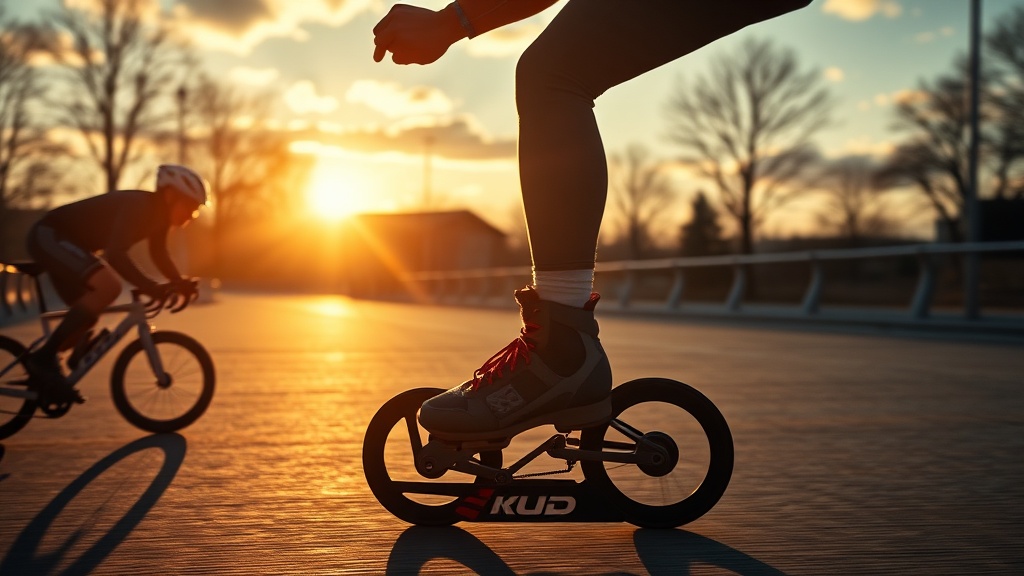
Improving Your Inline Skating Endurance Through Interval Training

You will learn how to structure interval sessions to build cardiovascular stamina and muscular endurance for longer skate sessions.
Building the capacity to skate for two or three hours without hitting a wall isn't just about riding more miles. It requires a specific approach to how you push your heart rate and your muscle fibers. This guide breaks down how to implement interval training—both high-intensity and low-intensity—to ensure your lungs and legs don't give up long before your spirit does.
Most skaters fall into the trap of doing the same steady-state pace every single time they lace up. While steady-state cardio is fine for maintaining a baseline, it won't force your body to adapt to the changing demands of a long-distance route. If you want to increase your top speed and your ability to recover quickly during a hard climb, you need to introduce variation. This means alternating between periods of high exertion and periods of active recovery. It's about teaching your body to clear lactic acid faster so you can keep moving when the terrain gets tough.
Can interval training actually increase my skating speed?
The short answer is yes. Speed on inline skates is a combination of explosive power and aerobic capacity. By incorporating high-intensity intervals (HIIT), you are training your anaerobic system to handle short bursts of intense effort. This is particularly helpful when you encounter a headwind or a steep incline that demands more power from your quads. When you push hard for sixty seconds and then back off for ninety, you're teaching your heart to pump more blood efficiently and your muscles to recover under stress.
Try a session like this: find a straight stretch of path or a paved trail. Skate at about 85-90% of your maximum effort for one minute. Follow that with two minutes of very light, easy-paced skating. Repeat this cycle ten times. This structure forces your body to deal with the buildup of metabolic byproducts and then work to clear them out while you're still moving. It's much more effective for building a competitive edge than just skating at a medium pace for an hour.
| Interval Type | Intensity Level | Recovery Period | Primary Benefit |
|---|---|---|---|
| High-Intensity Sprint | 85-95% | 2-3 Minutes | Anaerobic Capacity |
| Tempo Interval | 70-80% | 1 Minute | Aerobic Threshold |
| Endurance Interval | 50-60% | 3-5 Minutes | Recovery Efficiency |
How often should I do intense interval sessions?
One of the biggest mistakes I see is skaters trying to do high-intensity intervals every single day. If you do that, you'll end up burnt out or injured. Your nervous system needs time to recover just as much as your legs do. A solid routine usually involves one or two dedicated interval sessions per week, surrounded by your regular long-distance skates. This keeps your body guessing and prevents the dreaded plateau where you feel like you're working hard but not actually getting any faster.
If you find that your heart rate stays elevated even during your easy skates, you've likely overdone it. Listen to your body. If you feel heavy-legged or uncoordinated, take a day off or stick to a very light recovery skate. You can learn more about the physiological aspects of high-intensity training through resources like the Healthline guides on HIIT to understand how it affects your metabolic rate.
What are the best drills for building skating endurance?
Beyond pure speed intervals, you should incorporate technical drills that build muscular endurance. This is where the "strength" side of fitness meets the "skill" side of skating. For example, practicing your stride with a wider base or focusing on a deep knee bend during your intervals can build significant stability. A strong core is also vital here; if your upper body is wobbling, you're wasting energy that should be going into forward momentum.
I suggest incorporating "cadence drills" into your sessions. This involves increasing your stroke frequency (how fast your legs move) while maintaining a steady pace. This builds the neurological pathways required for quick footwork. For those interested in the biomechanics of movement, checking out the scientific literature on human movement can provide insight into how muscle recruitment works during repetitive motions.
When you're out there, remember that endurance is a mental game too. The ability to maintain a rhythm when your lungs are burning is a skill you can train. Don't just focus on the distance; focus on the quality of each single stroke. If you can maintain your form even when you're tired, you'll find that your long-distance capacity grows much faster than if you just try to power through the fatigue with bad technique.
The goal isn't to be a sprinter; the goal is to be a skater who can sustain power. By mixing up your intensity, you're building a more versatile engine. Whether you're hitting the streets of Philly or a dedicated bike path, these structured intervals will ensure that you're always moving forward, faster and stronger than the last time you laced up.