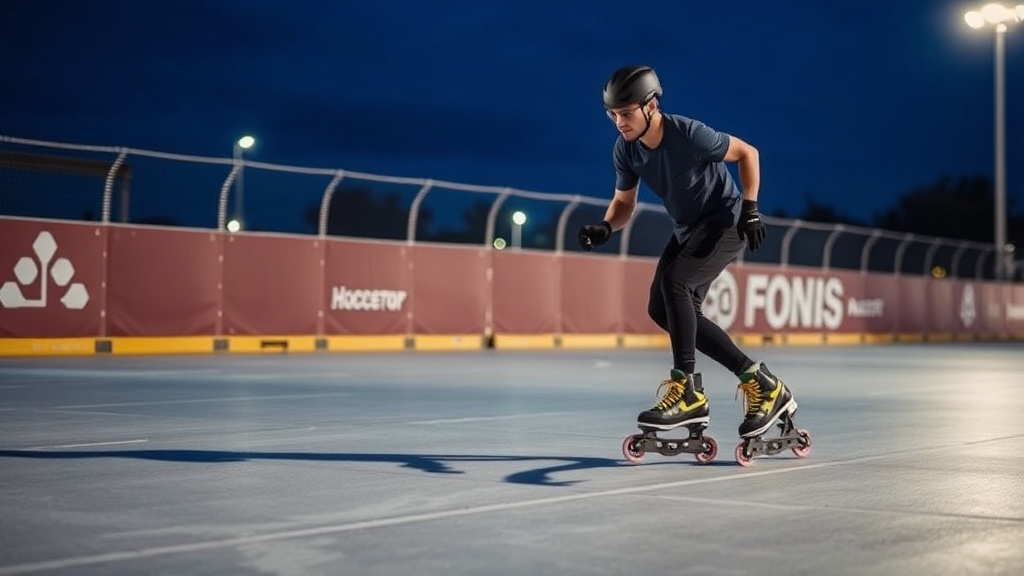
Fix Your Inline Skating Posture for Better Efficiency

What causes poor form while skating?
You'll learn how to identify postural mistakes that kill your speed and how to fix them through specific body alignment shifts. Most skaters focus entirely on their legs, but your upper body dictates how much energy you waste. If your torso is slumped or your head is too far forward, you're fighting your own weight instead of moving through it. This post covers the technical adjustments needed to stay aerodynamic and stable.
Bad posture usually stems from a lack of core engagement or an overreliance on the arms for balance. When you lean too far forward—specifically into a "hinge" that collapses at the hips—you put immense pressure on your lower back. This isn't just uncomfortable; it's a recipe for long-term injury. Instead, you need to focus on a neutral spine that allows your weight to flow forward naturally. A slight tilt from the ankles is much better than a heavy bend from the waist.
One common mistake is the "turtle neck," where the head shoots forward to compensate for a sagging chest. This shifts your center of gravity and makes it harder to maintain balance during high-speed cornering. To avoid this, keep your gaze ahead, not at your feet. Looking at your skates makes you lose sight of the path and forces your spine into a rounded position. Think about keeping your head level with your hips—this keeps your vision clear and your body upright.
The way you use your arms also changes your efficiency. Many skaters swing their arms wildly or keep them tucked too tight against their ribs. Ideally, your arms should act as counterweights to your leg movements. If you're out of sync, you'll feel a jerky, unstable sensation. You want a rhythmic, controlled motion that complements your stride without throwing your upper body off-axis. If your arms are too stiff, you'll lose the ability to react to sudden bumps or shifts in the terrain.
How do I improve my core strength for skating?
A strong core is the bridge between your upper and lower body. Without it, your movements become disconnected and shaky. You don't need to spend hours in a gym; instead, focus on movements that mimic the skating stride. Planks and rotational exercises are great, but the key is stability under tension. When you're on the skates, your core is what keeps your torso steady while your legs are doing the heavy lifting. If your core fails, your posture collapses, and your speed drops instantly.
Try practicing your balance on a single leg while standing still before you hit the road. This develops the micro-muscles in your midsection that keep you upright. When you're moving, imagine a string pulling the top of your head toward the sky. This mental cue helps prevent the slouching that often happens during the final miles of a long session. If you feel yourself leaning too much into your toes, reset your hips. A slight bend in the knees—not the waist—is where your stability lives.
Which body parts are most affected by bad form?
Your lower back and hip flexors take the brunt of poor alignment. When you lean too far forward at the waist, your hip flexors tighten up, which can lead to chronic pain. This isn't just about skating; it's about how your body handles repetitive motion. If you want to stay in this sport for years, you have to respect the mechanics of your hips. A stable pelvis is the foundation of a fast stride.
The following table shows how different body positions affect your movement:
| Body Part | Poor Form Result | Ideal Alignment |
|---|---|---|
| Upper Back | Rounded shoulders, restricted breathing | Open chest, neutral spine |
| Hips | Collapsed pelvis, lower back pain | Active, engaged hip hinge |
| Arms | Erratic swinging, loss of balance | Controlled, rhythmic counterweight |
| Head/Neck | Forward tilt, neck strain | Level gaze, eyes up |
Don't ignore the sensation of fatigue in your upper body. Often, when skaters get tired, they stop using their core and start leaning on their hands or swinging their arms more aggressively. This is a sign that your posture is breaking down. When you feel that shift, it's time to slow down or adjust your stance. You can find more detailed biomechanical advice through resources like the NSCA to understand how muscle engagement works during repetitive athletic movements.
If you find yourself constantly fighting to stay upright, your center of gravity is likely too high or too low. A common way to check this is to observe your shadow while skating in sunlight. If your shadow looks disconnected or overly hunched, you're likely losing your form. Keeping your weight over the middle of your skates—rather than just the toes or heels—will help keep your center of gravity stable. This makes every stride more efficient and less taxing on your muscles.
For more tips on maintaining physical health and understanding movement, checking out specialized sports medicine sites like Mayo Clinic can provide insight into preventing the repetitive strain injuries that come from poor posture. Staying proactive is much better than trying to fix an injury after it happens.