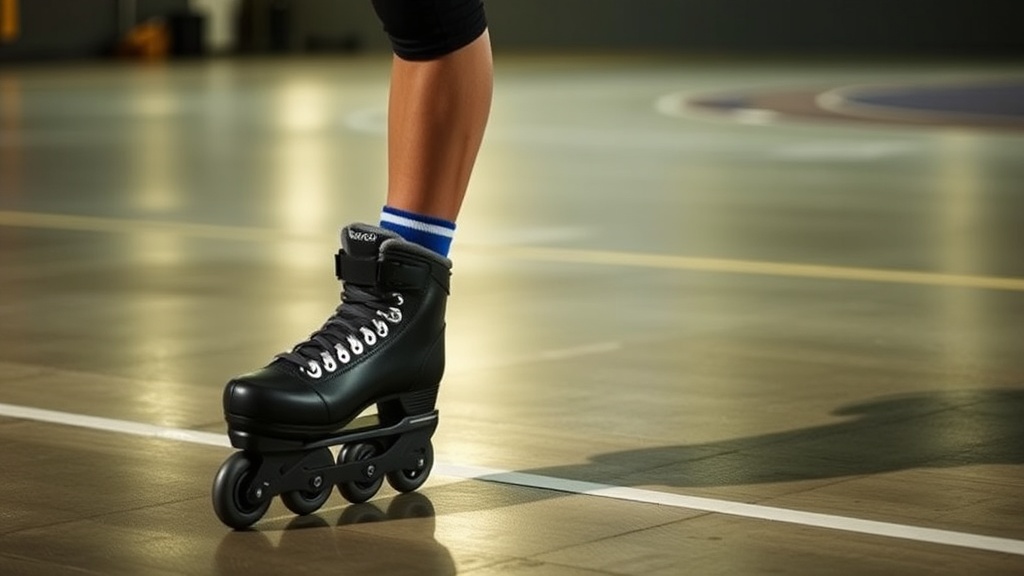
Build Bulletproof Ankles: key Strength Drills for Inline Skaters

This post breaks down the best ankle-strengthening exercises for inline skaters — from single-leg balance work to resistance-band routines that mimic the demands of a stride. Strong ankles aren't just about avoiding sprains (though that's a big part of it). They determine how confidently you carve, stop, and handle rough pavement. Whether you're commuting through Center City on Rollerblade Twisters or cruising the Schuylkill River Trail on the weekend, the drills below will give you the stability to skate harder and longer without wobbling.
Why Do Inline Skaters Need Strong Ankles?
Strong ankles act as shock absorbers and steering mechanisms every time a wheel hits a crack or a pebble. Inline skating places lateral stress on the ankle joint that walking or running simply doesn't replicate. When you're rolling on a 4x80mm setup at speed, even a small shift in weight can torque the ankle if the surrounding muscles aren't firing properly. Weak ankles lead to pronation, instability, and the kind of low-grade sprains that keep skaters off their wheels for weeks.
The catch? Most people train ankles as an afterthought — a few calf raises after a leg day and that's it. Skaters need targeted work that builds both strength and proprioception (your body's awareness of where the joint is in space). A 2018 study published in the Journal of Athletic Training found that proprioceptive training reduced ankle sprain recurrence by roughly 40% in athletes. For skaters, that translates to fewer bailouts at crosswalks and cleaner transitions between strides.
What Are the Best Ankle-Strengthening Exercises for Skaters?
The most effective ankle exercises for inline skaters combine balance challenges, resistance training, and eccentric loading. These movements directly replicate the forces the ankle absorbs during skating.
Single-Leg Balance on an Unstable Surface
Start simple. Stand on one foot on a foam pad, pillow, or a Rogue Balance Board if you're feeling ambitious. Hold for 30 seconds, then switch sides. To make it skate-specific, hinge slightly forward at the hips — mimicking the skating stance — while keeping the knee aligned over the toes. This small shift engages the peroneals and tibialis anterior, the muscles that keep the ankle from rolling inward.
Progress the drill by adding head turns, arm reaches, or catching a light ball. The goal isn't stillness; it's controlled chaos. Your ankle should make dozens of micro-adjustments per second. That's exactly what happens when you hit unexpected debris at 15 miles per hour.
Resistance-Band Eversion and Inversion
Loop a light Rogue Fitness resistance band around the ball of the foot and anchor it to a table leg. Turn the foot outward (eversion) for 3 sets of 15 reps, then inward (inversion) for the same. Keep the movement slow — two seconds out, two seconds back. The peroneals (outer ankle) and posterior tibialis (inner ankle) are often neglected in standard gym routines, yet they're the primary stabilizers when you're edging into a turn.
Don't rush these. The muscles are small and fatigue quickly. Quality beats quantity every time.
Eccentric Calf Lowers
Stand on a step with the heels hanging off. Rise up on both toes, then shift to one leg and lower down as slowly as possible — aim for a 5-second descent. Do 3 sets of 10 per leg. This exercise strengthens the Achilles tendon and gastrocnemius, both of which absorb impact during every push-off. Research from the Mayo Clinic supports eccentric loading as a primary treatment for Achilles tendon issues, which are common in skaters who increase mileage too quickly.
Tibialis Raises
Stand with your back against a wall, feet about a foot out. Dorsiflex the ankle — pull the toes toward the shin — without lifting the heels. Hold for two seconds at the top. Do 3 sets of 15.
The tibialis anterior is the unsung hero of ankle stability. It's the muscle that prevents the foot from slapping down after a stride and helps control deceleration. Weak tibialis muscles often show up as shin splints in newer skaters.
How Often Should Ankle Workouts Be Done?
Two to three short sessions per week — 10 to 15 minutes each — is enough to see real improvement without overtraining the smaller stabilizer muscles. The best approach is to tag ankle work onto the end of a skate session or a lower-body gym day. Warm ankles respond better to balance and band work than cold ones.
Here's a sample weekly structure that works well for recreational and fitness skaters:
| Day | Focus | Drills | Duration |
|---|---|---|---|
| Tuesday | Balance + Proprioception | Single-leg balance, eyes-closed stands, balance board | 12 min |
| Thursday | Strength + Resistance | Band eversion/inversion, tibialis raises | 10 min |
| Saturday | Post-Skate Recovery | Eccentric calf lowers, foam rolling, ankle circles | 15 min |
Worth noting: consistency matters more than intensity. A few minutes of targeted ankle work, done regularly, will outperform an hour-long crash session once a month.
Can Ankle Strength Actually Prevent Inline Skating Injuries?
Yes — but with realistic expectations. Strong, proprioceptively trained ankles reduce the risk of low-grade sprains, muscle strains, and overuse injuries. They won't make you invincible against a high-speed collision or a nasty pothole you never saw coming. What they will do is give the joint a wider margin of error. You'll recover from small wobbles before they become full-blown falls.
The American Academy of Orthopaedic Surgeons recommends balance and strengthening exercises as a first-line defense against ankle sprains in active populations. For skaters specifically, strong ankles also reduce compensatory stress on the knees and hips. When the ankle can't stabilize, the knee often collapses inward — a recipe for patellar tendon issues down the road.
When to Add External Support
If you're coming back from a previous ankle injury, a Bauerfeind MalleoTrain ankle brace can provide compression and proprioceptive feedback without completely immobilizing the joint. Some skaters also prefer semi-rigid braces for urban skating, where unpredictable surfaces are part of the deal. That said, braces shouldn't become a crutch. The long-term goal is to build the kind of intrinsic stability that makes external support optional.
What About Skating Itself as Ankle Training?
Skating does strengthen the ankles — but only up to a point. The repetitive motion of striding primarily loads the muscles in one plane of movement. It doesn't challenge lateral stability or extreme ranges of motion the way targeted drills do. That's why dedicated skaters — the ones logging 20-plus miles a week — still get hurt. They've built endurance without building resilience.
The fix is simple: treat skating as your sport, and ankle training as your prehab. One builds the engine; the other maintains the suspension.
Advanced Drills for Experienced Skaters
Once the basics feel easy, add complexity. Try single-leg hops on a soft surface, landing with minimal wobble. Or practice lateral bounds — jumping side to side — focusing on sticking the landing. These plyometric movements train the elastic qualities of the ankle tendons, which matter when you're executing quick direction changes or absorbing landings from small curbs.
Another underrated tool: vibration plates (the Power Plate is the most recognized brand). Standing in a skating stance on a vibration plate for 30-second intervals forces rapid muscular corrections. Studies suggest vibration training may improve balance and muscle activation, though the evidence is mixed. At the very least, it makes standard balance work significantly harder — and that's rarely a bad thing.
"Ankles are either the strongest link in your skating chain or the weakest. There isn't much middle ground."
Recovery matters too. After a hard skate, spend five minutes rolling the calves and peroneals on a TriggerPoint GRID foam roller. Tight calves restrict ankle dorsiflexion, which limits stride length and increases the risk of the heel lifting inside the boot. Follow rolling with ankle circles and gentle stretches for the Achilles.
Philadelphia skaters have an advantage here — the city's network of paved trails (the Schuylkill Banks Boardwalk, the Wissahickon Trail) offers varied terrain to test ankle stability at different speeds. Start on smooth asphalt, progress to slightly rougher paths, and let the terrain itself become part of the training stimulus. Just don't skip the strength work at home.