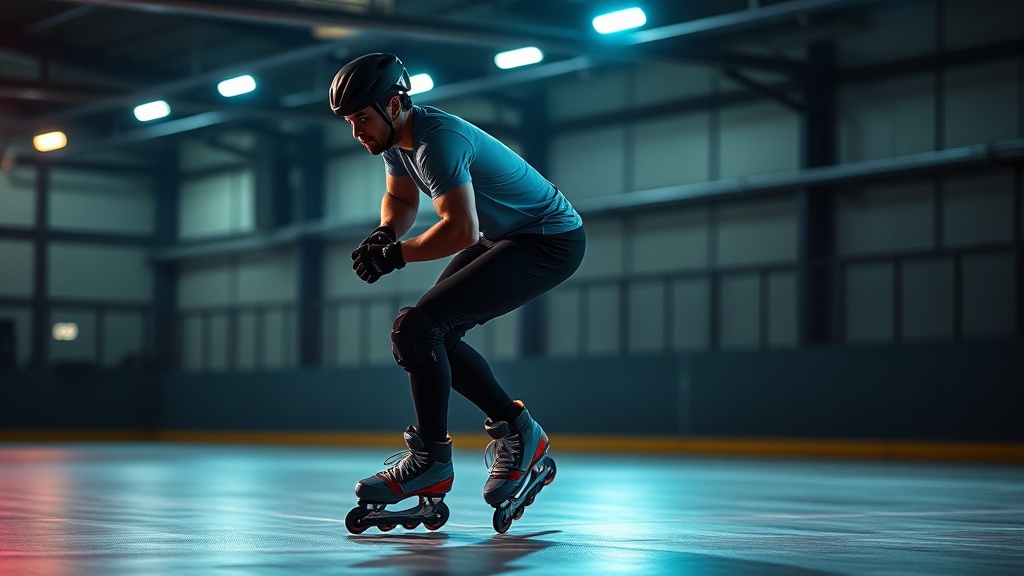
6 key Strength Exercises to Power Up Your Inline Skating

Single-Leg Squats for Balance and Power
Calf Raises to Build Ankle Stability
Russian Twists for Core Rotation Control
Lunges to Strengthen Push-Off Muscles
Plank Variations for Skating Posture
Inline skating demands more than just balance on eight wheels. Your legs, core, and stabilizing muscles work overtime to keep you upright, propel you forward, and help you brake safely when a stray crack in the pavement appears out of nowhere. Without targeted strength training, fatigue sets in fast — and tired muscles lead to sloppy form, which leads to falls.
This post breaks down six specific strength exercises that translate directly to better skating performance. You'll find moves that build explosive power for sprints, endurance for long urban cruises, and the stability that keeps your ankles from wobbling at speed. No gym membership? No problem. Most of these require minimal equipment — a pair of dumbbells, a resistance band, and maybe a bench or sturdy chair.
What Muscles Should You Train for Inline Skating?
Quadriceps, glutes, hamstrings, and calves handle the bulk of the work, but that's only half the story. Your hip abductors and adductors stabilize your stride, your core keeps your torso aligned, and your ankle stabilizers prevent the dreaded wobble that sends beginners sprawling.
Here's the thing: skating isn't just forward motion. Every push-off requires lateral hip strength. Every crossover turn engages your obliques. Even your upper back and shoulders come into play when you're pumping your arms during a sprint or absorbing impact from a jump.
Skaters who skip strength work often plateau early. They can cruise comfortably at moderate speeds but struggle with hills, quick direction changes, or long-distance endurance. The exercises below target the specific movement patterns skating demands — not generic gym routines that look impressive but don't transfer to the pavement.
Do Squats Really Help Inline Skating?
Absolutely — but not the bodybuilding variety where you're chasing maximum weight with shallow depth. Skaters need functional squat patterns that mimic the skating stance: a slight forward lean, knees tracking over toes, and the ability to hold position under fatigue.
Goblet Squats for Depth and Control
Hold a single dumbbell or kettlebell at chest height. (A 25-35 pound weight works for most intermediate skaters.) Set your feet shoulder-width apart, toes pointed slightly outward. Drop into a squat, keeping your chest up and driving your knees outward. The weight acts as a counterbalance, letting you sink deeper than a traditional barbell squat.
The magic happens in the hole — that bottom position where your hips drop below parallel. Skaters live in this range. Every time you coast into a T-stop or absorb a bump, your quads and glutes fire from a deep knee bend. Goblet squats build the strength and mobility to own that position.
Start with 3 sets of 12 reps. As you progress, slow down the eccentric — take 3 full seconds to lower yourself. The time under tension builds the muscular endurance you'll need for long skates through Fairmount Park or down Philadelphia's Kelly Drive.
Single-Leg Squats for Stability
Once goblet squats feel manageable, progress to single-leg variations. Stand in front of a bench or low box. Extend one leg forward and lower yourself until your glides touch the surface, then drive back up. These punish your quads while forcing your smaller stabilizer muscles to wake up.
Single-leg strength directly correlates to skating efficiency. Each push-off is essentially a single-leg effort. Weakness here means energy leaks — wasted motion that slows you down and tires you out faster than necessary.
What Are the Best Core Exercises for Skaters?
A strong core keeps your upper body quiet while your legs do the work. The best exercises for skaters resist rotation and extension — anti-movement patterns that mirror the forces you'll face on wheels.
Pallof Press for Anti-Rotation
Attach a resistance band to a sturdy anchor at chest height. Stand perpendicular to the anchor, holding the band with both hands at your sternum. Extend your arms straight forward. The band pulls you toward the anchor; your job is to resist that rotation and keep your hands centered.
Hold the extended position for 2-3 seconds, then return to start. The Pallof press builds the exact rotational stability you need when pushing laterally or executing crossover turns. It also protects your lower back during long skating sessions.
Perform 3 sets of 10 reps per side. Use a band that challenges you by the final rep but doesn't pull you off-balance. Rogue Monster Bands offer excellent resistance levels for this movement.
Dead Bug for Spinal Stability
Lie on your back, arms extended toward the ceiling, knees bent at 90 degrees. Slowly lower your right arm and left leg toward the floor while keeping your lower back pressed into the ground. Return to start, then switch sides.
The dead bug looks simple. It's not. That lower-back contact is the key — if your spine arches, you're cheating. This exercise trains your deep core muscles to maintain a neutral spine, which translates to better posture on skates and less energy wasted on unnecessary upper body movement.
How Can You Build Explosive Power for Sprints?
Speed on skates comes from powerful extension — the ability to drive force into the ground (or pavement) quickly. Plyometric exercises build this elastic strength, teaching your muscles to store and release energy efficiently.
Box Jumps for Hip Extension
Find a sturdy box or platform — start with 12-16 inches if you're new to plyometrics. Stand with feet hip-width apart, sink into a quarter squat, and explode upward, landing softly with both feet on the box. Step down carefully; don't jump down. The eccentric landing impact isn't worth the risk.
Box jumps develop the same explosive hip extension that powers your stride. The higher you can jump, the more force you can generate with each push-off. This matters when you're trying to maintain speed up a slight incline or accelerate out of a turn.
Quality over quantity here. Five explosive reps beat fifteen sloppy ones. Rest fully between sets — 2-3 minutes minimum. Plyometrics demand nervous system freshness; fatigue turns beneficial jumps into injury risks.
Skater Hops for Lateral Power
Stand on your right leg, left foot lifted slightly. Leap laterally to your left, landing on your left leg with a soft knee bend. Immediately explode back to the right. The goal isn't maximum distance — it's quick, ground contact and smooth transitions.
This movement pattern mirrors skating almost exactly. The lateral push-off, the weight transfer, the balance on one leg — it's all there. Skater hops also build ankle stability and proprioception, helping you recover when you hit an unexpected pebble or crack.
Exercise Comparison: When to Use What
| Exercise | Primary Benefit | Equipment Needed | Best For |
|---|---|---|---|
| Goblet Squat | Leg strength, depth mobility | Single dumbbell or kettlebell | Building foundational power |
| Single-Leg Squat | Unilateral stability | Bench or box | Correcting imbalances |
| Pallof Press | Anti-rotation core strength | Resistance band | Crossover turns, posture |
| Dead Bug | Spinal stability | None | Long-distance endurance |
| Box Jump | Explosive hip extension | Plyo box or sturdy platform | Sprint acceleration |
| Skater Hop | Lateral power, ankle stability | None | Agility and quick direction changes |
How Often Should Skaters Strength Train?
Two to three sessions per week hits the sweet spot for most recreational skaters. More than that, and you risk cutting into your actual skating time (which matters just as much for skill development). Less, and you won't see meaningful strength gains.
Structure matters. Do your heavy lower-body work — squats, deadlifts if you include them — on days when you're not planning a hard skate. Save the plyometrics and core work for days when you want to double up; these exercises actually prime your nervous system for skating rather than depleting it.
The catch? Consistency trumps intensity. Three moderate sessions every week for two months beats four brutal sessions followed by two weeks of skipping because you're burned out. Start with two 30-minute sessions. Add volume gradually as your recovery improves.
Sample Weekly Structure
Here's a practical split that fits around regular skating:
- Monday: Heavy squats, Pallof press, pull-ups or rows
- Tuesday: Skating — technique work, easy distance
- Wednesday: Single-leg squats, dead bugs, mobility work
- Thursday: Skating — intervals or hills
- Friday: Box jumps, skater hops, additional core
- Saturday: Long skate — park trails, urban exploration
- Sunday: Rest or light recovery — walking, stretching
Common Mistakes to Avoid
Skipping single-leg work is the big one. Bilateral exercises like standard squats build strength, but they let your dominant side compensate. That compensation creates imbalances — and imbalances on skates manifest as inefficient strides, uneven wear on your frames, or worse, repetitive stress injuries.
Another error: neglecting the posterior chain. Skaters love to train what they see in the mirror — quads and calves. But weak hamstrings and glutes contribute to knee pain and limit your power output. Make sure you're including hip hinge movements — Romanian deadlifts, kettlebell swings, or good mornings — in your routine.
Worth noting: strength training shouldn't leave you exhausted. The goal is to build capacity, not test limits every session. Leave a few reps in the tank on most sets. You should finish your workout feeling capable, not crushed. Your skating quality later that day or the next depends on it.
Finally, don't rush the progression. These exercises build on each other. Master the goblet squat before attempting single-leg variations. Own the basic Pallof press before adding movement or resistance. Patience here pays dividends — literally stronger, more stable skating for years to come.
Philadelphia's Schuylkill River Trail offers plenty of flat stretches to test your endurance and hilly sections near the Art Museum to challenge your power. The strength you build in the gym translates directly to confidence on those streets — whether you're commuting through Center City on a pair of Rollerblade Macroblade 80s or chasing speed on a closed course with Powerslide racing skates.
Lace up. Load the bar. Then get outside and roll.